
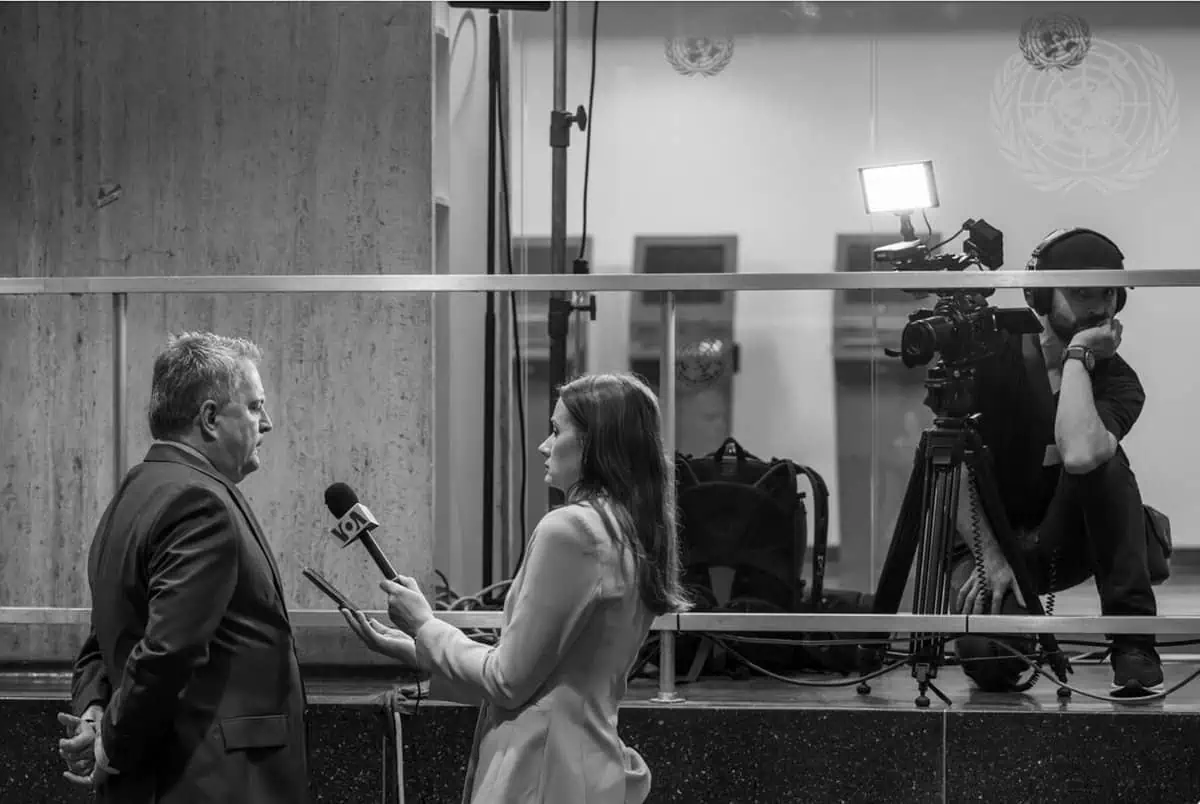
The media has long been described as a mirror of society, but the latest Global Media Monitoring Project (GMMP) report shows that this mirror is still distorted when it comes to women’s representation. Despite making up half of the world’s population, women remain underrepresented in newsrooms and in the stories that shape public opinion.
Underrepresentation That Hasn’t Changed in 15 Years
The 2025 report makes clear that little progress has been achieved since 2010. Women continue to be presented more as eyewitnesses or narrators of events than as experts or decision-makers. Their voices are often heard in personal accounts, but rarely in authoritative commentary that shapes narratives.
Even when reporting on gender-based violence (GBV), a pressing global issue, women’s perspectives are overlooked. The report notes that GBV stories are more likely to gain visibility if presented by women, yet such coverage remains scarce.
Minorities and Gender-Diverse Voices: Even More Marginalized
The findings also show a stark imbalance in how minorities and gender-diverse persons are represented. Out of 100 news stories, only six feature minority voices, and within this space just 38 percent are women. This means that a woman from a minority community has less than a one in ten chance of being seen or heard in the news.
Gender-diverse persons are almost invisible, making up just 0.4 percent of subjects and sources. Their presence appears mainly in stories on online GBV, sexual harassment, rape, or feminicide, reinforcing narrow frames of visibility.
Stereotypes That Refuse to Break
Perhaps most concerning is that only two out of every 100 news stories challenge gender stereotypes. This means the vast majority of reporting continues to recycle outdated ideas about what women and men can or cannot do, reinforcing social and cultural biases rather than challenging them.
Recommendations
The GMMP report recommends a comprehensive shift in how media institutions address gender equality. Among its key suggestions:
- Impress upon policy makers in government that gender equality in media is an issue of national security, economic stability and democracy.
- Move the burden of change from those outside the sector into news organisations themselves.
- Develop a water-tight business case for gender equality in the news industry.
- Encourage civil society and media development supporters to pivot from building alternative news systems centred on women, to opening pathways for women’s participation in the mainstream news sector where the bulk of audiences are found.
- Implement all the recommendations of the UN Pact for the Future and its Digital Compact that touch on gender equality and gender justice.
The GMMP 2025 report paints a sobering picture: the media is still failing to reflect women’s realities, voices, and expertise. Unless news organizations take responsibility for changing this narrative, another decade could pass with the same patterns repeating.
AUTHOR
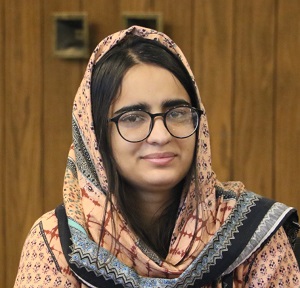
Shahana Naseer is a Research Assistant at the Centre for Research and Security Studies. Her work focuses on the impact of socio-political, economic, and environmental factors on women and children. She occasionally writes on the world’s shifting geopolitical dynamics.