
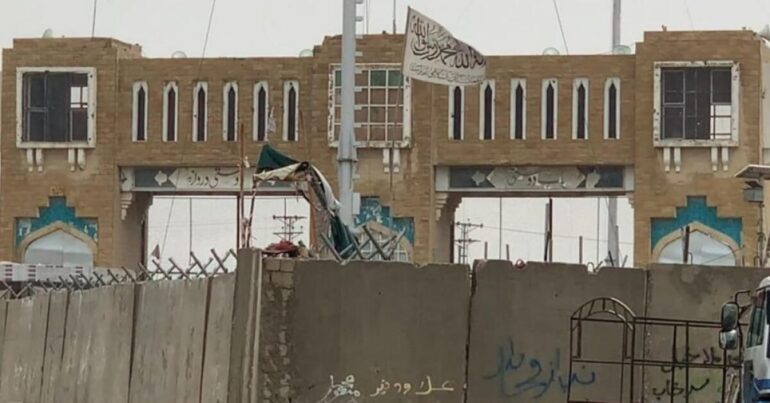
The Spin Boldak border crossing between Afghanistan and Pakistan is expected to reopen for trade within the next three days, according to the Taliban-run state broadcaster.
Mohammad Shafiq Achakzai, head of the Spin Boldak Chamber of Commerce and Investment, told the channel that preparations are underway to resume the movement of commercial goods through the key crossing point.
Since Friday, the border has only been open for the return of Afghan refugees deported from Pakistan, while all trade activity has remained halted.
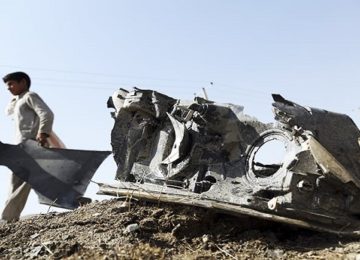
Cross-border trade and travel were completely suspended after heavy clashes erupted between Taliban and Pakistani forces early last week. The fighting, which took place along multiple frontier points including Spin Boldak and Torkham, left dozens dead on both sides, including civilians.
Although the two sides reached a ceasefire agreement in Doha, Qatar, on Saturday night, officials have not yet confirmed when the border crossings will fully reopen.
The recent border violence marks the latest episode in increasingly strained relations between Taliban and Islamabad. Pakistan has accused the Taliban of harboring militants from the Tehrik-i-Taliban Pakistan (TTP), while the latter have condemned Pakistan’s repeated cross-border airstrikes, calling them violations of Afghanistan’s sovereignty.
The closure of key trade routes such as Spin Boldak and Torkham has severely disrupted the movement of goods and people between the two countries. Thousands of trucks loaded with perishable items, fuel, and essential commodities have been stranded for days, leading to rising prices in Afghan markets and shortages of basic supplies in several border provinces.
The Torkham crossing, Afghanistan’s busiest land route to Pakistan, is also crucial for patients seeking medical treatment in Peshawar and other Pakistani cities. With its closure, many Afghans suffering from chronic illnesses or requiring specialized care have been unable to travel, compounding the humanitarian strain.
Local residents and business owners in border areas have described the situation as paralyzing, with day-to-day economic activities brought to a halt. For many families who depend on cross-border trade, the prolonged shutdown has meant the loss of their only source of income.
While the announcement of a possible reopening at Spin Boldak offers a glimmer of hope, uncertainty remains over how long the fragile ceasefire will hold and whether normal trade and movement will resume across all crossings.
SOURCE: Kabul Now