
Pakistan’s foreign office spokesperson on Thursday rejected Amnesty International’s call for an investigation into an Islamabad airstrike in Kabul months ago that the United Nations says killed over 260 people, accusing the non-governmental organization of levelling serious allegations without presenting evidence to back its claims.
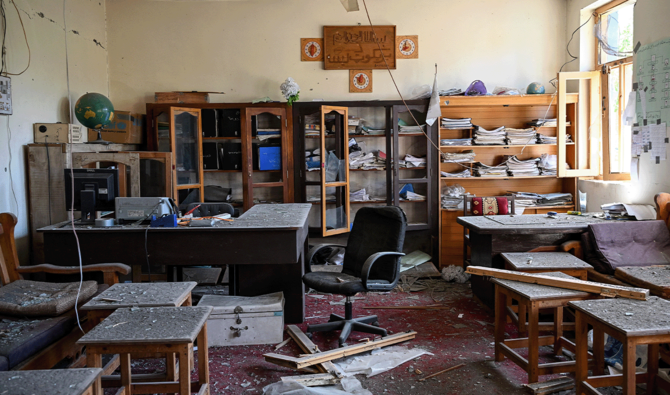
The strikes, carried out by Pakistan in Kabul on March 16, killed at least 269 civilians and injured 122 others, according to the UN Assistance Mission in Afghanistan (UNAMA). The Taliban administration had said in the immediate aftermath that more than 400 civilians were killed and over 250 wounded.
UNAMA and the Taliban-run government accused Pakistan of striking a drug rehabilitation center. Pakistan claimed its strikes that night had targeted “military and terrorist infrastructure.”
Amnesty International said on Wednesday that it found no evidence to support Islamabad’s claims, saying the strikes could be a “possible war crime.” The group said its findings were based on an analysis of more than 60 photos and videos from the site, as well as satellite imagery and interviews with current and former employees of the drug rehabilitation center, among other sources.
“We completely reject the allegations made by Amnesty International,” Pakistan’s foreign office spokesperson Tahir Andrabi told reporters during a press briefing. “It is unfortunate that such serious allegations have been presented without any credible evidence.”
Andrabi said the Taliban government continues to maintain a “permissive environment” for several militant organizations, allowing them access to sanctuaries and financing for cross-border attacks.
He said thousands of Pakistani citizens had been killed or injured in attacks planned and carried out from the Afghan soil, adding that Islamabad retains the right to defend itself against repeated attacks.
PAKISTAN ‘DISAPPOINTED’ ON GSP+ REPORT
Andrabi was asked about a recent report by the European Union last week which noted that Pakistan had regressed in several human rights areas despite a series of legal reforms. The report also raised concerns over enforced disappearances, the state of press freedom and judicial independence in the country, saying that positive change was “limited.”
The EU’s assessment reviewed Pakistan’s compliance with 27 international conventions underpinning its Generalized Scheme of Preferences Plus (GSP+), which grants developing countries preferential access to the European market in return for progress on human rights, environmental protection and good governance. Pakistan has been one of the largest beneficiaries of the scheme since joining it in 2014, exporting 7.5 billion euros ($8.7 billion) worth of goods to the EU in 2024 and benefiting from an estimated 732 million euros in tariff exemptions.
Andrabi said Pakistan appreciated the report’s acknowledgement of the country’s legislative progress and Islamabad’s continued compliance with the 27 international conventions.
“Nevertheless, I would be remiss if I do not express disappointment with the report’s overall narrative, which does not present a sufficiently balanced picture of Pakistan’s performance,” the FO spokesperson said.
He said the report understates the “breadth of reforms undertaken since Pakistan joined GSP+ in 2014,” adding that it also places a disproportionate emphasis on the “lower-than-desired progress” in a few areas.
He described the GSP+ as a mutually beneficial arrangement between Pakistan and the EU, saying that both sides cooperated in several areas such as development, migration, counterterrorism, regional stability, resilience, climate resilience and others.
“We will remain constructively engaged with the European Commission and other EU institutions and remain committed to the effective implementation of international conventions underpinning the GSP framework,” Andrabi said.
Source: Arab News