
By Abdul Waheed Waheed
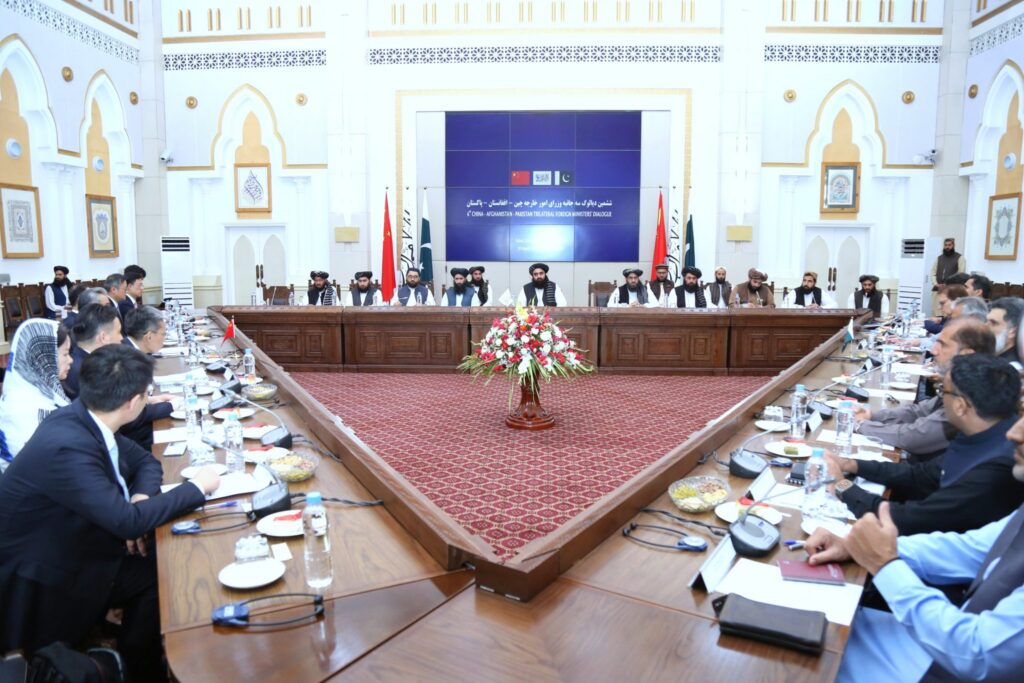
Following the intense confrontations that reached their peak in early 2026, emerging unofficial contacts in Kabul alongside China-mediated diplomatic engagement between the Islamic Emirate of Afghanistan (IEA) and Pakistan have increasingly been viewed as well-balanced channels for reducing tensions and preventing further escalation. In this context, the recent trilateral consultations held in Urumqi, Xinjiang, under the facilitation of China, have been described by sources in Kabul as a potentially important diplomatic opening. Conducted between April 1 and 7, 2026, the discussions reportedly brought together representatives from Afghanistan, Pakistan, and China in a comparatively pragmatic and candid setting focused on addressing the armed confrontations and deteriorating bilateral climate that had intensified since late 2025.
The key outcomes of the Urumqi process included commitments to avoid actions that could further escalate tensions, alongside an agreement to explore broader approaches to underlying disputes, particularly militancy-related concerns and localized security challenges. This reflected a growing recognition, shaped by economic pressures in Afghanistan, security considerations in Pakistan, and wider regional interests, of the high costs associated with continued confrontation. From Kabul’s perspective, the relative reduction in immediate hostilities following the talks, combined with the emphasis on sustained dialogue, contributed to perceptions that the consultations may have represented a limited but meaningful shift toward de-escalation.
What appeared to distinguish the Urumqi consultations from several previous engagements was the comparatively conciliatory tone reportedly adopted by Pakistan’s delegation, contributing to a more constructive and solution-oriented atmosphere. Unlike earlier exchanges frequently characterized by mutual accusations and rigid posturing, the discussions in Urumqi reportedly emphasized regional stability, acknowledged the role of Chinese mediation, and indicated openness toward broader diplomatic engagement without immediate escalation.
This shift, reportedly characterized by Chinese officials as candid, pragmatic, and constructive, helped move discussions beyond entrenched positions and recurring accusations toward broader understandings aimed at preventing further deterioration. The atmosphere of the talks appeared to reinforce perceptions in Kabul that a limited but potentially meaningful diplomatic opening may be emerging, generating cautious optimism that sustained backchannel engagement and pragmatic dialogue could gradually reduce long-standing mistrust surrounding militancy-related allegations, security concerns, and the management of tensions along the Durand Line.
The Urumqi talks effectively pressed a temporary pause button, building upon earlier ceasefire efforts facilitated by Qatar, Turkey, and Saudi Arabia. Nevertheless, several core disputes remain unresolved. Pakistan continues to seek verifiable action against alleged Tehreek-e-Taliban Pakistan sanctuaries, while Afghanistan has continued to oppose unilateral closures of crossing points along the Durand Line that disrupt civilian movement and trade. The IEA also continues to reject recognition of the Durand Line as a formal international boundary, while competing narratives regarding militancy support persist on both sides. Low-level incidents in certain areas have continued, underscoring that commitments made during negotiations require sustained implementation and verification mechanisms in practice.
A forward-looking strategic approach should seek to preserve and gradually institutionalize the momentum generated in Urumqi by reinforcing emerging unofficial and mediated channels of engagement through sustained diplomatic encouragement and regular dialogue. Over time, such interactions could evolve into more structured and predictable mechanisms incorporating confidence-building arrangements, limited technical coordination, independent monitoring provisions, localized management mechanisms along the Durand Line, targeted anti-militancy cooperation, and the restoration of trade and economic connectivity.
In this context, China remains uniquely positioned to facilitate gradual de-escalation due to its strategic interests linked to the Belt and Road Initiative and the China–Pakistan Economic Corridor. Through calibrated economic incentives, infrastructure commitments, humanitarian assistance, and trilateral diplomatic frameworks, Beijing could encourage a more stable regional environment while providing both sides with political space to reduce tensions incrementally. Meanwhile, the IEA may obtain greater room for internal stabilization, governance consolidation, and limited international engagement if a relatively calmer security environment is sustained.
The repeated unilateral closure of crossing points along the Durand Line, coupled with military strikes inside Afghanistan, has clearly failed to produce sustainable solutions to underlying security concerns. Instead, such measures have significantly damaged bilateral trust, intensified public resentment, and contributed to the further rise of anti-Pakistan sentiment across Afghanistan.
From Kabul’s perspective, the Urumqi consultations represent a narrow but potentially valuable diplomatic opening. Whether this opportunity evolves into more durable outcomes, however, will largely depend on the extent to which both sides translate rhetorical flexibility into observable and verifiable behavioral adjustments. In this regard, continued assessment of IEA signaling, Pakistani policy responses, and Chinese mediation efforts will remain important for evaluating the broader trajectory of this emerging dynamic within the security landscape of South and Central Asia.
Ultimately, the long-standing reliance on proxy dynamics, the pursuit of ideological objectives through militancy, and the overreliance on military operations and coercive approaches to counterterrorism have increasingly proven ineffective, costly, counterproductive, and unsustainable for achieving durable regional stability. The persistence of such policies has contributed to recurring cycles of retaliation, political volatility, humanitarian suffering, and broader regional instability.
Meaningful progress is therefore likely to depend more on strategic patience, political realism, and gradual confidence-building than on expectations of rapid reconciliation. Deep-rooted historical grievances, mutual distrust, ideological differences, and domestic political calculations on both sides suggest that any improvement will likely remain gradual and limited in the near term. Nevertheless, the sustained reinforcement of relatively positive signals emerging from Urumqi and similar unofficial channels, combined with constructive diplomatic engagement from China, calibrated economic incentives, and mutually beneficial regional connectivity initiatives, could help reduce escalation risks, ease humanitarian pressures, and encourage a more stable form of coexistence. In this regard, the continuation of diplomatic initiatives facilitated by China is likely to remain important and broadly appreciated as part of wider regional efforts aimed at preventing further escalation and encouraging sustained dialogue.
AUTHOR

Abdul Waheed Waheed is a Kabul-based peace and political analyst and a key participant of CRSS’s Beyond Boundaries initiative.