
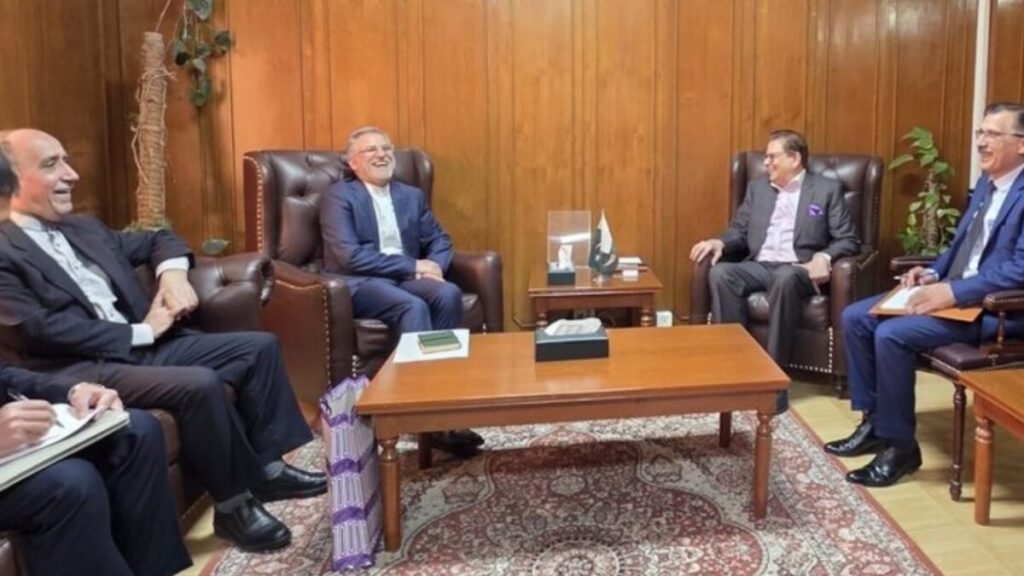
The special envoys for Afghanistan from Pakistan and Iran met in Islamabad on Thursday to discuss what they described as growing regional security concerns, particularly the threat posed by militant groups operating in Afghanistan.
Mohammad Sadiq Khan, Pakistan’s special representative for Afghanistan, said in a post on X that he had exchanged views with his Iranian counterpart, Mohammad Reza Bahrami, on “key concerns, including the security dynamics and the threat posed by terrorist groups active on Afghan soil.”
Sadiq emphasized Pakistan’s continued commitment to working closely with Iran and other regional partners to confront shared security challenges, particularly terrorism, and to support efforts aimed at advancing peace and stability across the region.
He described the meeting — which took place during an Iranian delegation’s visit to Islamabad — as “an opportunity for frank and constructive discussions” on regional developments.
Bahrami, the Iranian envoy, echoed that sentiment, saying that both sides emphasized peaceful solutions to regional disputes as the most effective path toward stability, cooperation, and collective security.
The meeting came amid heightened tensions between Pakistan and the Taliban, following a series of violent incidents and stalled diplomatic efforts.
In recent weeks, the two sides held two rounds of talks in Istanbul but failed to reach an agreement. Pakistan has repeatedly called on the Taliban to take action against Tehrik-i-Taliban Pakistan (TTP), a banned militant group that Islamabad claims is based in Afghanistan. The Taliban have rejected the allegations, calling the issue an internal matter for Pakistan and denying TTP’s presence in the country.
However, a UN monitoring group has estimated that the TTP maintains as many as 6,000 fighters inside Afghanistan.
Tensions spiked further after Taliban accused Pakistan of carrying out airstrikes on Monday night in the eastern provinces of Khost, Kunar, and Paktika. According to Taliban officials, 10 civilians were killed, including nine children and one woman. The United Nations has also reported civilian casualties in Khost.
While the Pakistani military has not confirmed the airstrikes, a spokesperson for the army offered only a cautious denial during a press conference. Pakistan’s defense minister, Khawaja Asif, however, took a more combative tone in an interview with Geo News, saying that Pakistan “no longer expects anything positive” from the Taliban.
SOURCE: Afghanistan International